
Looking for a reliable supplier of S690QL and S690Q high-strength structural steel plates? You've come to the right place.
As a premier manufacturer and supplier of high-strength steel plates in China, GNEE Steel has over 18 years of expertise in producing and supplying quenched and tempered steels for critical global projects.
This guide will clarify the technical distinctions between S690QL and S690Q grades, helping you select the right material for demanding applications like heavy machinery, mining equipment, and offshore structures.
Both S690QL and S690Q belong to the family of high-yield strength, quenched and tempered structural steels defined under the EN 10025-6 standard. They offer a minimum yield strength of 690 MPa, making them ideal where weight reduction and high load-bearing capacity are paramount. The primary difference lies in the impact toughness requirements at low temperatures, denoted by the suffix letters.
The most critical distinction is in their Charpy V-notch impact energy.
S690Q: This grade specifies standard impact toughness tested at room temperature (typically +20°C). It is suitable for applications where extreme low-temperature service is not a primary concern.
S690QL: The 'L' stands for 'Low temperature' application. This grade has stricter requirements for impact toughness at -40°C or -60°C (depending on the sub-grade, e.g., S690QL1 for -40°C). It is mandatory for structures operating in Arctic environments, offshore platforms, or any setting prone to brittle fracture risk.
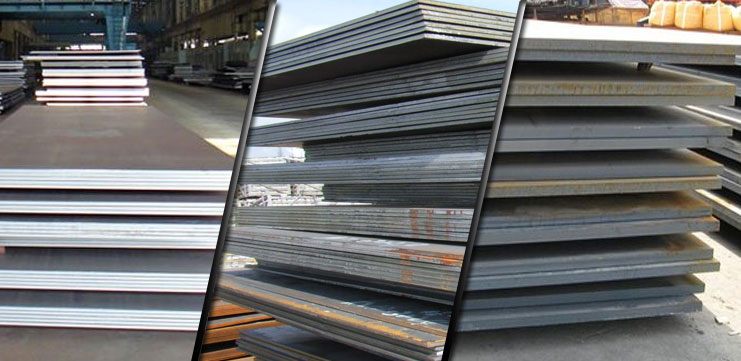
While both grades have similar strength levels, their chemical compositions are tailored to achieve different toughness properties. S690QL often has tighter control on elements like phosphorus and sulfur and may include micro-alloying elements to enhance low-temperature toughness.
| Parameter | S690Q (EN 10025-6) | S690QL / S690QL1 (EN 10025-6) |
|---|---|---|
| Minimum Yield Strength (ReH) | 690 MPa | 690 MPa |
| Tensile Strength (Rm) | 770 - 940 MPa | 770 - 940 MPa |
| Minimum Elongation (A5) | 14% | 14% |
| Impact Test Temperature | +20°C | -40°C (for QL1) / -60°C (for QL2) |
| Min. Impact Energy (KV) | Typically 30J (subject to thickness) | 40J at -40°C (QL1) / 30J at -60°C (QL2) |
| Typical Applications | General heavy construction, high-load components, mobile cranes. | Offshore structures, wind turbine towers, mining equipment in cold climates, lifting components. |
Your choice depends entirely on the operational environment and design specifications.
Choose standard S690Q for applications with high static loads in moderate climates.
Opt for S690QL when your structure faces dynamic loading, shock, or will be deployed in environments where temperatures routinely fall below -20°C. For detailed S690Q steel plate specifications, consult our technical team.
As a direct S690Q steel plate manufacturer, GNEE controls the entire process from melting and quenching to tempering and ultrasonic testing. We provide:
Full Material Traceability with Mill Certificates (3.1 or 3.2).
Precision Cutting (plasma, laser, waterjet) to your dimensions.
Support for Third-Party Inspection (SGS, BV, TÜV).
Expertise in exporting to global project sites with certified packaging.
Understanding the fundamental difference between S690QL and S690Q is crucial for engineering safety and performance.
For projects requiring guaranteed low-temperature toughness, S690QL is the non-negotiable choice. Contact GNEE Steel today for a competitive quote, detailed technical data sheets, and expert guidance on sourcing the correct S690QL or S690Q steel plates for your next major build. Request your free project consultation and price list now.